

What is the porosity of materials with High Silica Fiber Chopped Strand?
Jan 02, 2026
Hey there! As a supplier of High Silica Fiber Chopped Strand, I've gotten a lot of questions about the porosity of these materials. So, I thought I'd take some time to break it down for you all.
First off, let's talk a bit about what High Silica Fiber Chopped Strand is. It's a super useful material made from high - silica glass fibers that are chopped into short lengths. These chopped strands have a bunch of great properties like high temperature resistance, good insulation, and chemical stability. They're used in all sorts of industries, from aerospace to automotive, and even in some high - end construction projects.
Now, onto the main topic: porosity. Porosity refers to the amount of void space within a material. In the case of High Silica Fiber Chopped Strand, porosity plays a crucial role in determining its performance in different applications.
Factors Affecting Porosity
There are several factors that can influence the porosity of High Silica Fiber Chopped Strand.
Manufacturing Process
The way these chopped strands are made has a big impact on their porosity. For example, during the fiber - drawing process, the speed and temperature can affect how the fibers are formed. If the drawing speed is too fast, the fibers might not have enough time to fully solidify, leading to a more porous structure. On the other hand, if the temperature is too high, it could cause the fibers to melt and fuse together, reducing the porosity.
Fiber Diameter
The diameter of the individual fibers also matters. Smaller - diameter fibers tend to pack together more closely, resulting in lower porosity. Larger - diameter fibers, on the other hand, leave more space between them, increasing the porosity of the chopped strand material.

Compaction
How the chopped strands are compacted during the manufacturing or application process can change their porosity. If they're compacted tightly, the void space between the fibers will be reduced, and the porosity will go down. Looser compaction, however, will keep the porosity higher.
Measuring Porosity
There are a few different ways to measure the porosity of High Silica Fiber Chopped Strand.
Archimedes' Principle
One common method is based on Archimedes' principle. You weigh the dry sample of the chopped strand, then immerse it in a liquid (usually a non - reactive one like water or ethanol) and measure the volume of the liquid displaced. By comparing the dry weight and the volume of the displaced liquid, you can calculate the porosity.
Mercury Intrusion Porosimetry
Another technique is mercury intrusion porosimetry. In this method, mercury is forced into the pores of the material under increasing pressure. By measuring the amount of mercury that enters the pores at different pressures, you can get detailed information about the pore size distribution and the overall porosity.
Importance of Porosity in Applications
The porosity of High Silica Fiber Chopped Strand is really important in its various applications.
Insulation
In insulation applications, a higher porosity can be beneficial. The void spaces within the chopped strand act as pockets of air, which are excellent insulators. Air has a low thermal conductivity, so the more air pockets (higher porosity), the better the insulation performance. For example, in high - temperature furnaces, High Silica Fiber Chopped Strand with high porosity can help reduce heat loss and improve energy efficiency.
Filtration
When it comes to filtration, the porosity determines the size of the particles that can be filtered. A material with larger pores (higher porosity) can filter out larger particles, while a material with smaller pores (lower porosity) is better for filtering out finer particles. So, depending on the specific filtration requirements, the porosity of the chopped strand needs to be carefully controlled.
Composite Materials
In composite materials, the porosity can affect the mechanical properties. If the porosity is too high, it can weaken the composite structure because the voids act as stress concentrators. On the other hand, a certain amount of porosity can be beneficial as it can improve the adhesion between the chopped strand and the matrix material in the composite.
Our High Silica Fiber Chopped Strand Offerings
As a supplier, we offer High Silica Fiber Chopped Strand with different porosities to meet the diverse needs of our customers. Whether you need high - porosity strands for insulation or low - porosity ones for a specific composite application, we've got you covered.
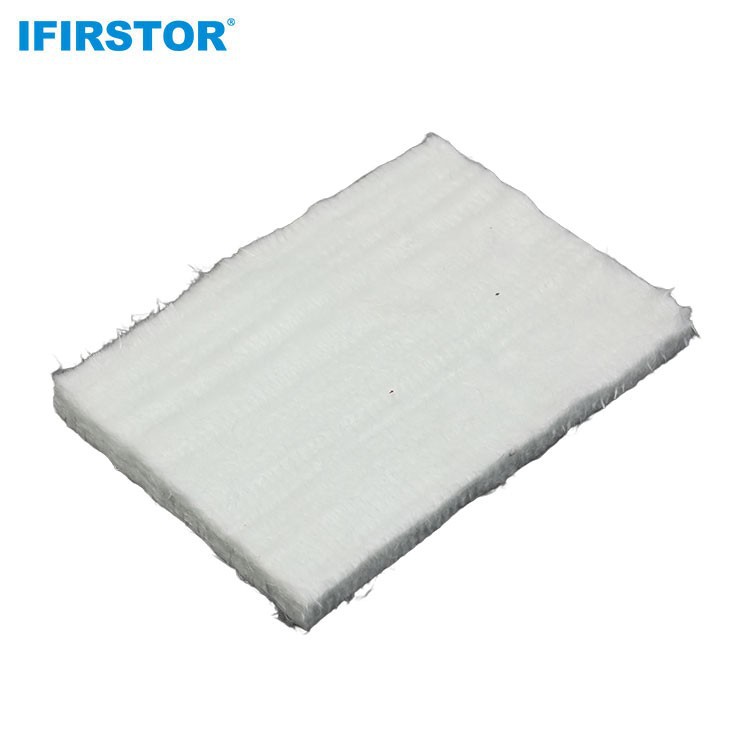
We also have related products like High Silica Fiber Fabric and High Silica Fiber Felt. These products also have unique porosity characteristics that can be tailored to your requirements.
Contact Us for Your Needs
If you're in the market for High Silica Fiber Chopped Strand or any of our other high - silica fiber products, don't hesitate to reach out. We're always happy to discuss your specific needs, provide samples, and offer technical support. Whether you're a small - scale manufacturer or a large industrial company, we can work with you to find the perfect solution. You can visit our product page High Silica Fiber Chopped Strand to learn more about our offerings and start the procurement process.
References
- Callister, W. D., & Rethwisch, D. G. (2011). Materials Science and Engineering: An Introduction. Wiley.
- Lewis, J. A. (2006). The role of porosity in ceramic processing. Journal of the American Ceramic Society, 89(6), 1771 - 1789.