

What is the modulus of elasticity of High Silica Fiber Chopped Strand?
Nov 04, 2025
What is the modulus of elasticity of High Silica Fiber Chopped Strand?
As a supplier of High Silica Fiber Chopped Strand, I often receive inquiries from customers about the various properties of this remarkable material, and one question that frequently comes up is about its modulus of elasticity. In this blog post, I'll delve into the concept of the modulus of elasticity, explain what it means for High Silica Fiber Chopped Strand, and discuss its significance in different applications.
Understanding the Modulus of Elasticity
The modulus of elasticity, also known as Young's modulus, is a fundamental mechanical property that measures the stiffness of a material. It is defined as the ratio of stress (force per unit area) to strain (deformation per unit length) within the elastic range of a material. In simpler terms, it tells us how much a material will stretch or compress when a certain amount of force is applied to it.
Mathematically, the modulus of elasticity (E) is expressed as:
[E=\frac{\sigma}{\epsilon}]
where (\sigma) is the stress and (\epsilon) is the strain.
A high modulus of elasticity indicates that a material is stiff and resists deformation under load, while a low modulus of elasticity means the material is more flexible and can undergo significant deformation without breaking.
Modulus of Elasticity of High Silica Fiber Chopped Strand
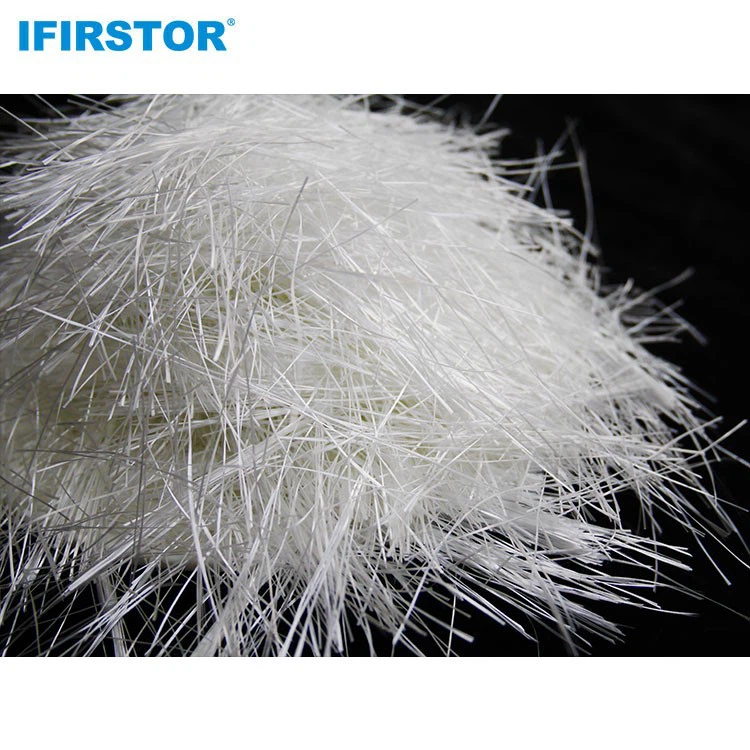
High Silica Fiber Chopped Strand is a type of inorganic fiber with excellent high - temperature resistance, chemical stability, and mechanical properties. The modulus of elasticity of High Silica Fiber Chopped Strand typically ranges from 60 to 80 GPa. This relatively high modulus of elasticity makes it a stiff and strong material, capable of maintaining its shape and integrity under various mechanical stresses.
The high modulus of elasticity of High Silica Fiber Chopped Strand is due to its unique chemical composition and microstructure. High silica fibers are mainly composed of silicon dioxide ((SiO_2)) with a content of over 96%. The strong covalent bonds between silicon and oxygen atoms in the silica structure contribute to the high stiffness of the fibers. Additionally, the fiber's crystalline or semi - crystalline structure further enhances its mechanical properties.
Significance in Different Applications
1. Thermal Insulation
In thermal insulation applications, the modulus of elasticity of High Silica Fiber Chopped Strand plays a crucial role. When used as insulation material in high - temperature environments, such as in industrial furnaces or aerospace applications, the material needs to maintain its shape and structure to effectively prevent heat transfer. The high modulus of elasticity ensures that the chopped strands do not deform easily under the influence of temperature gradients or mechanical vibrations, thereby maintaining the integrity of the insulation layer.

2. Composite Reinforcement
High Silica Fiber Chopped Strand is widely used as a reinforcement material in composites. When incorporated into a matrix material, such as a polymer or ceramic, the high modulus of elasticity of the chopped strands helps to improve the overall stiffness and strength of the composite. For example, in polymer - matrix composites, the fibers can bear a significant portion of the applied load, reducing the stress on the polymer matrix and enhancing the composite's mechanical performance. This makes the composites suitable for applications where high strength - to - weight ratio is required, such as in automotive parts or sporting goods.
3. Fire - Resistant Materials
In fire - resistant applications, the high modulus of elasticity of High Silica Fiber Chopped Strand is essential for maintaining the structural integrity of the fire - resistant material. When exposed to high temperatures during a fire, the material needs to resist deformation and maintain its shape to provide effective fire protection. The stiff nature of the chopped strands ensures that the fire - resistant material does not collapse or lose its protective properties, providing valuable time for evacuation and fire - fighting operations.
Comparison with Other Fibers
When compared to other common fibers, such as glass fibers or carbon fibers, High Silica Fiber Chopped Strand has its own unique advantages in terms of modulus of elasticity.
Glass fibers typically have a modulus of elasticity in the range of 70 - 85 GPa, which is similar to that of High Silica Fiber Chopped Strand. However, high silica fibers offer better high - temperature resistance than glass fibers, making them more suitable for applications in extreme heat environments.
Carbon fibers, on the other hand, have a much higher modulus of elasticity, ranging from 200 to 700 GPa. While carbon fibers are extremely stiff and strong, they are also more expensive and less resistant to oxidation at high temperatures compared to High Silica Fiber Chopped Strand. Therefore, the choice between these fibers depends on the specific requirements of the application, such as temperature, cost, and mechanical performance.
Our High Silica Fiber Products
As a supplier, we offer a wide range of High Silica Fiber products, including High Silica Fiber Chopped Strand, High Silica Fiber Mesh Fabric, and High Silica Fiber Fabric. Our products are manufactured using advanced production techniques to ensure high quality and consistent performance.
We can customize the length, diameter, and surface treatment of the High Silica Fiber Chopped Strand according to your specific requirements. Whether you need a small quantity for research purposes or a large - scale supply for industrial applications, we have the capacity to meet your needs.
Contact Us for Procurement
If you are interested in our High Silica Fiber products or have any questions about the modulus of elasticity or other properties of High Silica Fiber Chopped Strand, please feel free to contact us. We are committed to providing you with the best products and services, and we look forward to discussing your procurement needs with you.
References
- "High - Temperature Fibers: Properties, Production, and Applications" by J. Bunsell and R. Renard.
- "Handbook of Advanced Ceramics" edited by S. Somiya.
- Research papers on the mechanical properties of high silica fibers published in journals such as "Journal of Materials Science" and "Composites Science and Technology".