

How does a fire extinguisher blanket interact with water?
Oct 31, 2026
Hey there! As a supplier of fire extinguisher blankets, I often get asked about how these blankets interact with water. It's an interesting topic, and one that's important for understanding the best ways to fight fires in different situations.
First off, let's talk about what a fire extinguisher blanket is. A fire extinguisher blanket is a safety device designed to smother small fires. It's usually made of fire - resistant materials like fiberglass or wool. These blankets work by cutting off the oxygen supply to the fire, which is one of the three elements (along with fuel and heat) needed to sustain a fire.
Now, how does it interact with water? Well, there are a few different scenarios to consider.
Scenario 1: Using the Blanket with Water as a First Step
Sometimes, when facing a small fire, you might start by using water to cool down the burning material. Water is great for reducing the heat of the fire. As water evaporates, it takes a large amount of heat energy with it, cooling the area around the fire.
Once you've used water to bring the temperature down, you can then use a Fire Extinguisher Blanket to smother the remaining embers. The blanket will prevent any oxygen from reaching the embers, ensuring that the fire doesn't reignite. This combination can be really effective in quickly extinguishing a small fire, like a grease fire in the kitchen.

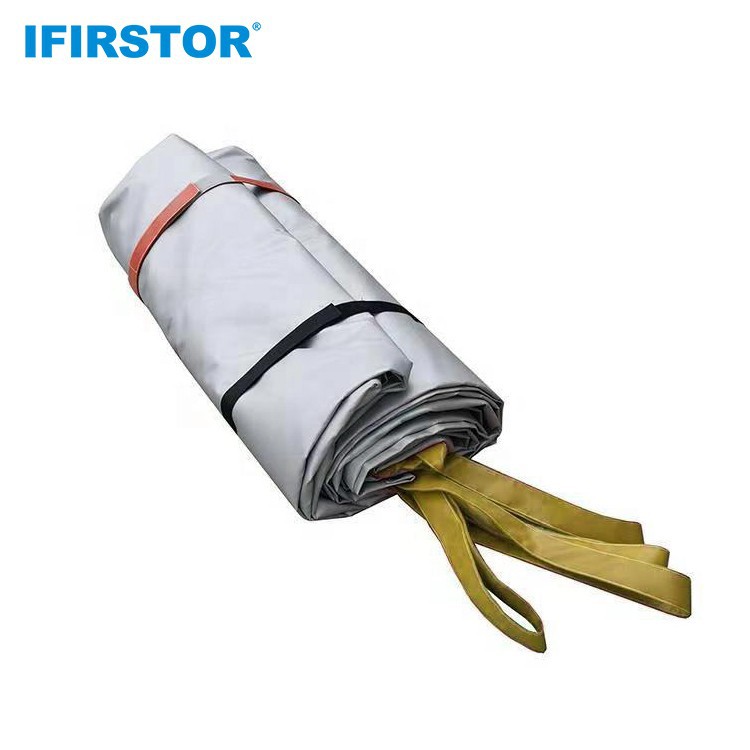
Scenario 2: Water on a Wet Blanket
If the fire extinguisher blanket gets wet, say from a sprinkler system or someone accidentally splashing water on it, it can still work. The water on the blanket adds an extra layer of protection. It further helps in cooling down the fire when the blanket is placed over it. The water also acts as a barrier, making it even more difficult for oxygen to reach the fire.
However, it's important to note that if the blanket is completely saturated and heavy with water, it might be a bit more cumbersome to handle. But in most cases, a slightly wet blanket can still be effectively used to smother a fire.
Scenario 3: Water and Different Types of Fire Blankets
There are various types of fire blankets, each with its own characteristics. For example, a Car Fire Blanket is specifically designed to deal with fires in a car. These blankets are often compact and lightweight for easy storage in a vehicle.
When it comes to interacting with water, a car fire blanket can work in a similar way to a regular fire extinguisher blanket. You can use water to cool down the engine or other hot components of the car, and then place the blanket over the fire source.
A Fireproof Blanket is another type. These blankets are made to withstand high temperatures. If water is used in combination with a fireproof blanket, the water cools the surface of the blanket, which can then be more effectively placed over the fire without the risk of the blanket catching fire itself.
A Welding Blanket is often used in industrial settings. Welding can create sparks and small fires. Water can be used to dampen the area around the welding site to prevent fires from spreading. Then, a welding blanket can be used to cover any potential ignition sources or small fires that do start. The water on the blanket can also protect the welding area from excessive heat.
An EV Fire Blanket is designed for electric vehicle fires. Water is sometimes used to cool down the battery pack in an EV fire, as the battery can overheat and cause a fire. After using water to cool the battery, an EV fire blanket can be placed over the battery to isolate it and prevent oxygen from reaching any remaining hot spots.
Considerations for Using Fire Extinguisher Blankets and Water Together
There are a few things to keep in mind when using a fire extinguisher blanket and water together.
Firstly, not all fires should be extinguished with water. For example, grease fires or electrical fires can be made worse by adding water. Grease and water don't mix, and adding water to a grease fire can cause the grease to splash and spread the fire. Electrical fires can be extremely dangerous to extinguish with water, as water is a conductor of electricity. In these cases, it's best to use the fire extinguisher blanket on its own.
Secondly, when using a wet blanket, make sure it's not dripping water onto areas that could be damaged by water. For example, in a room with electrical equipment, dripping water could cause a short - circuit.
Lastly, always follow the instructions on the fire extinguisher blanket and any safety guidelines. Different blankets might have specific recommendations on how to use them, especially when combined with water.
Why You Should Consider Our Fire Extinguisher Blankets
As a supplier, I can tell you that our fire extinguisher blankets are of high - quality. They're made from the best fire - resistant materials, ensuring that they can effectively smother fires. Whether you need a Car Fire Blanket for your vehicle, a Fireproof Blanket for your home, or an EV Fire Blanket for your electric car, we've got you covered.
Our blankets are also designed to be easy to use. You don't need any special training to use a fire extinguisher blanket. Just grab it, unfold it, and place it over the fire. And if you want to use water in combination with our blankets, you'll find that they work great together.
If you're interested in purchasing our fire extinguisher blankets, or if you have any questions about how they interact with water or their use in general, don't hesitate to reach out. We're here to help you make the right choice for your fire safety needs. Whether it's for your home, business, or vehicle, our fire extinguisher blankets are a reliable and cost - effective way to protect against fires.
References
- Fire Safety Handbook: A comprehensive guide on fire safety and the use of different fire - fighting equipment.
- National Fire Protection Association (NFPA) standards on fire blankets and water use in fire suppression.